What Nobody Tells You About the First Two Years of Parenthood
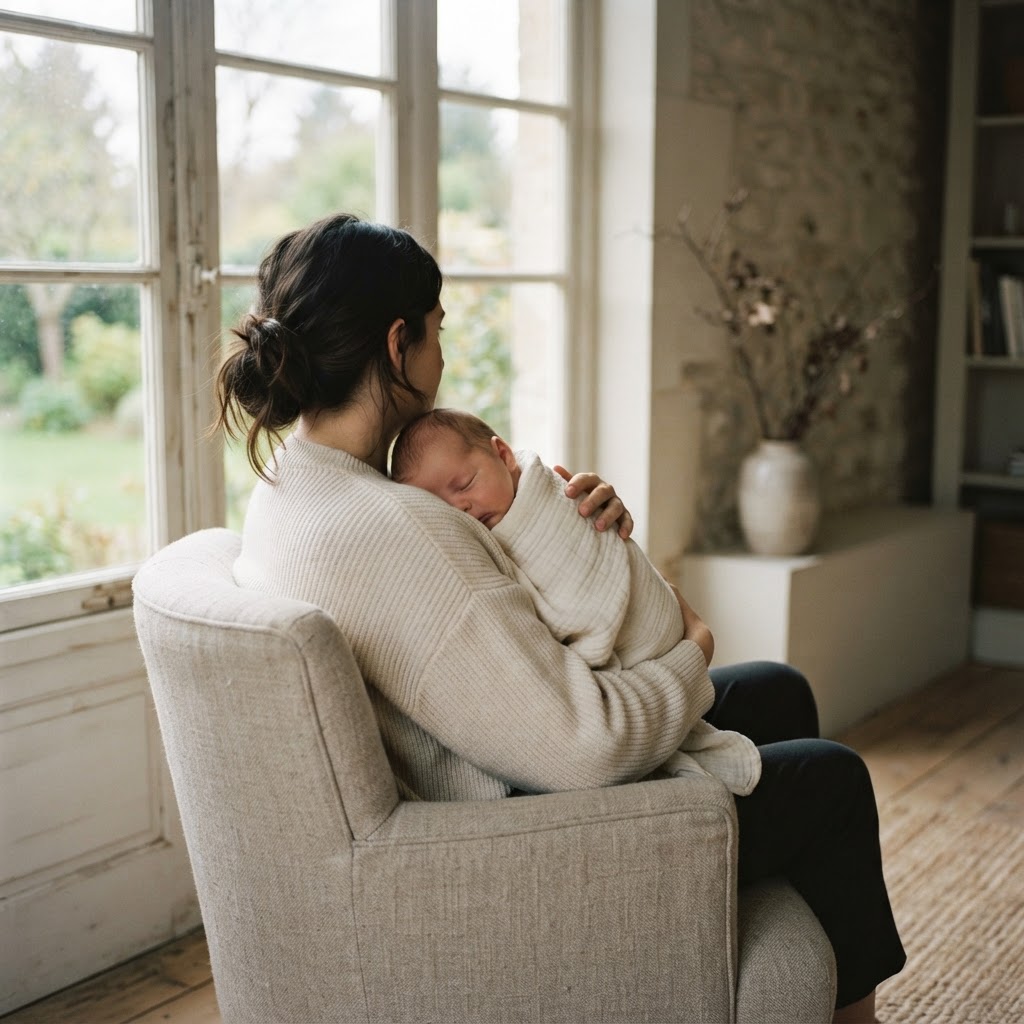
The identity crisis that arrives with the baby. The friendships that quietly dissolve. The relationship that strains under weight it was never warned about. The strange grief for the person you were. And alongside all of it, something unexpected: a depth of meaning and a capacity for love that most people have no framework for until they are inside it.
Your Brain Has Literally Changed
Neuroscientific research shows that parenthood transforms not only the lives and behaviours of parents, but also their brains, with hormonal shifts and neural adaptations that change the structure and function of a person's brain.
For mothers, changes begin before birth. At one month postpartum, mothers show changes in white matter pathways connecting brain regions involved in social cognition, memory and emotional regulation. These are not minor adjustments. They are structural reorganisations of how the brain processes the social world.
For fathers, the changes are equally real. The male brain appears to prune back certain pathways and rewire others in preparation for fatherhood, with the most substantial rewiring occurring in the first six weeks postpartum. The grey matter reduction, which sounds alarming, is now understood as adaptive: a streamlining of the brain to work more efficiently for the cognitive challenges of parenthood. When men lost more brain volume, they were more motivated to engage in parenting, enjoyed it more, and spent more time with their infants.
The brain you have after becoming a parent is not a diminished version of the one you had before. It is a reorganised one, and in the long run, parenthood may be neuroprotective for the ageing brain.
Your Identity Has Shifted, and That Requires Grieving
Longitudinal studies document significant shifts in how individuals define themselves through the transition to parenthood. Core personality traits generally remain stable, but their expression and prioritisation often change dramatically. Conscientiousness typically increases while openness to new experiences may temporarily decrease before rebounding.
In the first years of parenthood, parents experience a relatively high level of in-depth exploration and reconsideration of commitment, essentially, a sustained period of asking who they are now. Women show higher levels of this exploration than men. Men experience stronger identity uncertainty related to the parental role. Both are documented and normal.
The research also identifies something that matters enormously: pregnancy and the early postpartum period may induce changes in identity and personality that are not merely functional for parenting but transformative in a broader sense.
The transformation is real. The grief that accompanies it is also real. And both can coexist with profound love for the child at the centre of it all.
Your Relationship Is Under Documented Pressure
Despite the joy surrounding a new baby, numerous studies document a robust decline in marital satisfaction across the transition to parenthood, with the period of intense adjustment beginning at pregnancy and typically ending around the child's second birthday.
The decline is real, but its mechanism is specific. A recent study found that the decrease is primarily predicted by increases in conflict and decreases in positive partner behaviours, specifically the loss of emotional intimacy and appreciation. Sleep deprivation plays a compounding role: objectively measured sleep time is one of the strongest predictors of relationship satisfaction in the postpartum period, more powerful than mood, communication frequency or expressed division of tasks.
There is also a perception problem. Research confirms that mothers consistently underestimate how disrupted their partner's sleep is and overestimate his reported relationship satisfaction. These misperceptions drive resentment that is not caused by the relationship dynamic itself, but by the cognitive distortion that severe sleep deprivation produces in both partners.
The reassuring finding, one that gets far less attention, is that parents on average report higher family satisfaction in the years post-birth than in the two years before. The relationship often contracts before it expands. Couples who navigate that contraction most successfully understand it as temporary and structural rather than permanent and personal.
Your Social World Has Contracted, and That Is a Crisis
66% of parents feel isolated and lonely, with that figure rising to 77% for single parents. Even before the pandemic heightened social isolation, one study reported that 32% of parents of young children were always or often lonely, compared to 18% of adults overall.
The mechanism is straightforward: when people become parents, their social circles shrink significantly, increasing the likelihood of feeling disconnected. The loss of a pre-baby social life is mourned by a majority of new mothers. This is not simply about having less time to socialise. It is about moving into a new identity while your existing social world has not moved with you.
The consequences are not trivial. Parental loneliness is associated with depression in new parents, increased health service visits during pregnancy, and intergenerational impacts on child mental health and social competence. Higher loneliness is directly related to higher parenting stress, while higher social connectedness measurably buffers and reduces it.
The village is not a luxury. The research confirms it is a protective factor for both parent and child.
Your Life Is More Meaningful, Even When It Is Harder
This is where the research becomes both humbling and genuinely reassuring.
A landmark European study finds a consistent distinction that most conversations about parenthood miss entirely: parenthood is linked to lower life satisfaction for some groups, but to higher meaning in life across diverse populations. Both life satisfaction and meaning increased at the birth of the first child, but satisfaction declined after about 18 months while meaning remained elevated.
Parenthood does not make every day happier. The research is honest about that. What it delivers instead is meaning at a depth that very few other life experiences match. Having children is associated with a greater sense of meaningfulness for both genders, and parenthood is positively associated with mental wellbeing in middle age even when accounting for selection effects.
Research on pride and awe in parenthood adds a final dimension. Parental awe, the experience of being genuinely astonished by your child, is associated with greater meaning in life, greater psychological richness, and a measurable increase in purpose over time. These are not small or sentimental effects. They are among the most robust predictors of long-term adult wellbeing in the literature.
The first two years are often not happier in the daily moment. But they are more meaningful. And meaning, the research consistently shows, is the deeper and more durable form of human flourishing.
What Nobody Actually Tells You
The challenges of the first two years are not primarily personal failures. They are the predictable consequences of navigating one of the most complex developmental transitions in adult life, without adequate preparation, structural support or genuine community.
Sleep deprivation without a night nurse is a structural problem. Loneliness without a village is a structural problem. Relationship strain without a functioning household is a structural problem. Identity crisis without coaching support is a structural problem.
None of these are solved by trying harder or waiting for it to pass, although it does, eventually, get better.
They are solved by design. By building the people, the systems and the support network that allow both parents to navigate this season with something left in reserve, for each other, for their child, and for the person each of them is still becoming.
Begin with a Blueprint conversation at vouchnest.com.au
References
1. Society for Neuroscience (2025). The parenting brain: The neuroscience behind nurture. Neuroscience 2025 annual meeting.
2. Saxbe, D. et al. (2024). Cortical volume reductions in men transitioning to first-time fatherhood reflect both parenting engagement and mental health risk. Early Childhood Matters.
3. Daneshnia et al. (2025). Fatherhood dramatically rewires your brain, scans reveal. Science Alert.
4. UK Biobank Analysis (2025). Parenthood is neuroprotective for the ageing brain. Cited in: The surprising science of how fatherhood changes the brain.
5. Lasota, M. (2024). Processes and statuses of parental identity at different stages of parenthood. Identity: An International Journal of Theory and Research, 24(2), 139 to 155.
6. Van den Akker et al. (2024). From Partnership to Parenthood: A Review of Marital Change Across the Transition to Parenthood. Developmental Psychopathology.
7. Pollmann-Schult, M. (2026). New study sheds light on the mechanisms behind declining relationship satisfaction among new parents. PsyPost.
8. Tran, C. et al. (2024). Transition to parenthood: The association between expectations and family-life satisfaction. Social Psychological and Personality Science, 15(8).
9. Ohio State University Wexner Medical Center (2024). Survey finds loneliness epidemic runs deep among parents. ScienceDaily.
10. Nowland, R. et al. (2024). Loneliness in pregnancy and parenthood: Impacts, outcomes and costs. Yale Journal of Biology and Medicine, 97(1), 93 to 98.
11. Garcia, A.S. et al. (2025). Loneliness, parenting stress, and the buffering effect of social connectedness. The Family Journal, 33(1), 93 to 103.
12. Hudde, A. (2025). Parenthood in Europe: Not more life satisfaction, but more meaning in life. Journal of Marriage and Family.
13. Eriksson, M. et al. (2024). Reciprocal associations between parenthood and mental wellbeing, a prospective analysis from age 16 to 52 years. Current Psychology, 43, 2238 to 2252.
14. Chee, Y.K. et al. (2025). Feeling pride and awe in parenthood. Social Psychological and Personality Science.
Share
Found this useful? Share it with another family.

Written by
Avril Elving
Your Coach, Strategist & Project Planner
Avril built a career leading global organisations through complexity and change. After twenty-five years of executive leadership, she founded Vouchnest to give families the same calibre of strategic support she once brought to boardrooms — quiet, thoughtful, and built on trust.
- 25 years of executive leadership
- Family systems & strategy
- Founder of Vouchnest
- Mother & Author
- Neurolinguistic Practitioner
- Clinical Psychology Student
Enjoyed this reflection?
Subscribe to receive new insights from the Vouchnest Journal — no spam, unsubscribe anytime.