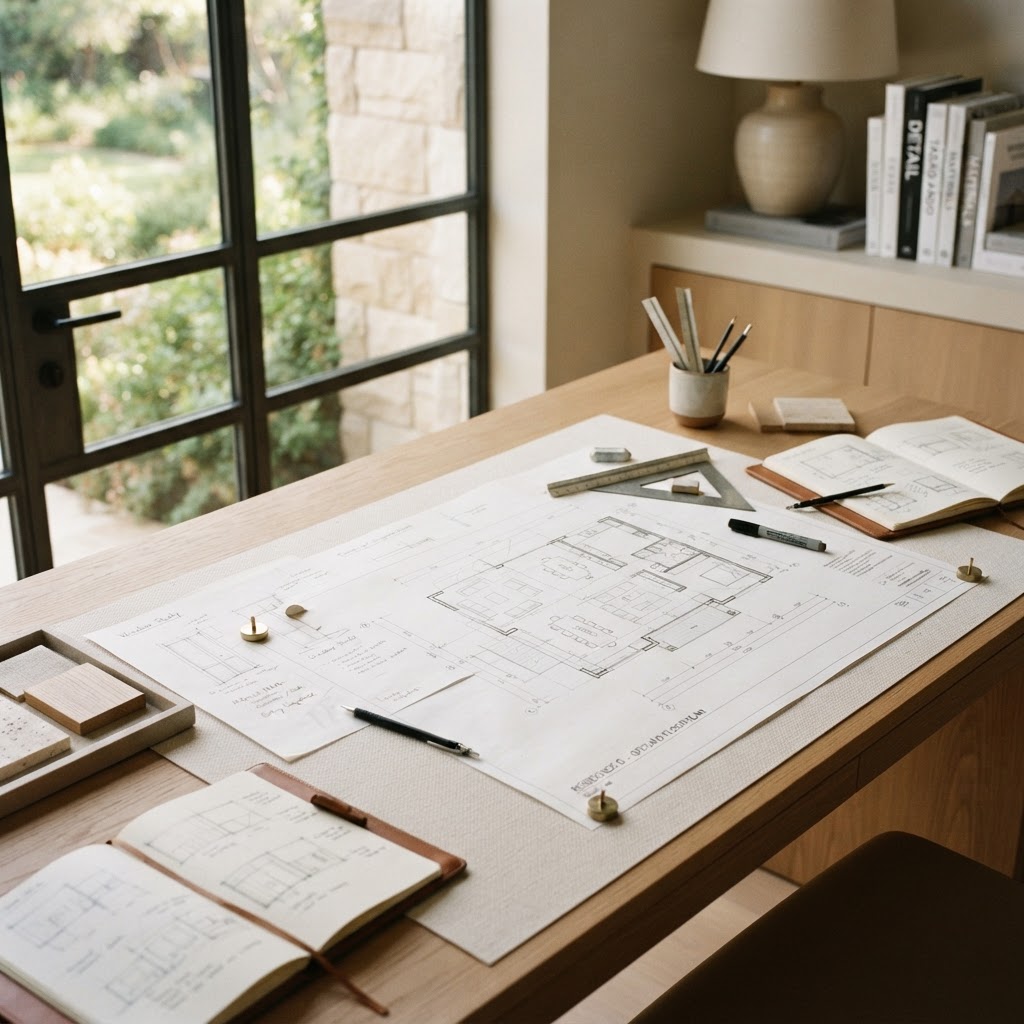
The unseen structure
Every family operates within a structure. Not the physical walls of a home, but something less visible — the rhythms, routines, roles and systems that determine how each day unfolds. Who does what. When things happen. How decisions are made. Where the pressure points are.
This structure — the architecture of family life — is rarely designed on purpose. More often, it accumulates. It forms through habit, circumstance and the momentum of busy lives. And because it's invisible, families rarely examine it until something starts to crack.
When the architecture is sound
When a family's architecture is well-designed, you can feel it. The morning has a rhythm. Transitions happen without friction. The household runs with a quiet efficiency that doesn't feel rigid — it feels calm. There's space for spontaneity because the essentials are handled. There's energy for connection because no one is running on empty.
This isn't about perfection. It's about intention. A family with sound architecture still has hard days. But the structure holds them. The systems absorb the shock. The routines provide a through-line of stability even when everything else is uncertain.
When the architecture is fragile
When the architecture is fragile — and most families, at various stages, experience this — the signs are unmistakable. Mornings are rushed and tense. Transitions become flashpoints. Decisions are made reactively, in the moment, often by whoever has the bandwidth. The mental load is unevenly distributed. Small disruptions create disproportionate chaos.
The fascinating thing is that fragile architecture doesn't discriminate by capability. Some of the most accomplished, organised people we know operate within family structures that are quietly buckling. Not because they lack skill. Because the structure was never designed — it was inherited, assembled piece by piece under pressure, and never given the attention it needed.
The elements of design
A well-designed family architecture rests on a few core elements:
Rhythm — the natural cadence of the day, week and season. Not a rigid schedule, but a reliable flow that everyone can feel.
Roles — clarity about who holds what, so nothing falls through the cracks and no one carries more than they should.
Systems — the behind-the-scenes processes that keep a household functioning, from meal planning to household management to communication.
People — the trusted individuals who form the extended support network, each playing a defined role.
Space — physical and emotional room for the things that matter most — connection, rest, presence.
Building on purpose
The families who thrive are not the ones with the most resources or the least stress. They're the ones who recognise that family life has an architecture — and choose to design it on purpose.
They step back and ask: Does our morning routine set the tone we want? Are the roles in our household working for everyone? Do our systems support us, or do we spend our energy maintaining them? Have we built the village we need?
These aren't small questions. But they're the ones that change everything. Because when the architecture is sound, family life doesn't just function — it flourishes.