It Takes a Village: A Research-Backed Guide for New Mothers on Building Your Support System
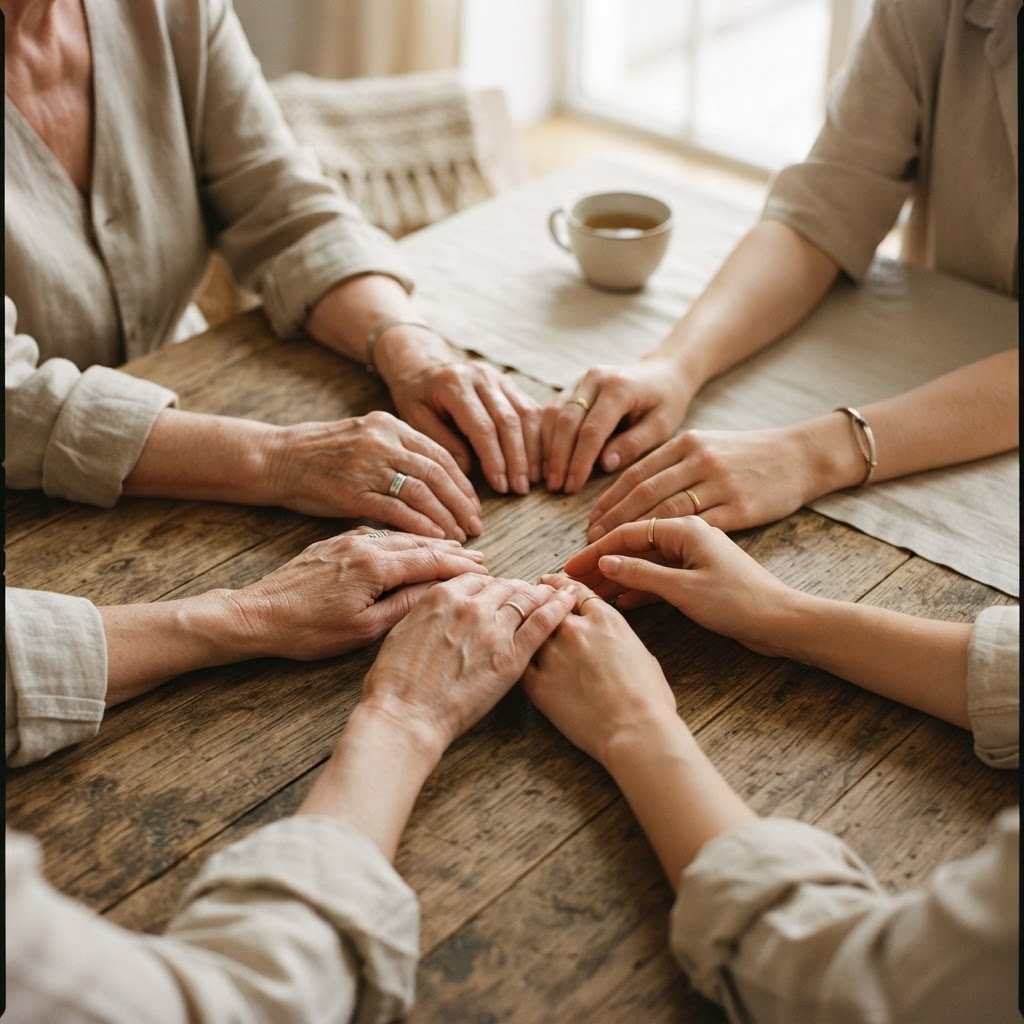
You are not dropping the ball. You are carrying more than any one person was designed to carry alone. Here's what the research says about building the support system you actually need.
You are not dropping the ball. You are carrying more than any one person was designed to carry alone.
The pressure on new mothers today — particularly high-achieving women who have built careers on competence and control — is unlike any previous generation. You are expected to recover physically, bond deeply, maintain your professional edge, manage your household, and do all of it with warmth and grace.
Research is clear: this is not a personal failing. It is a structural problem. And the solution is not trying harder. It is building your village.
This guide draws on current research in maternal psychology, matrescence studies, and social support science to give you practical, evidence-backed strategies for doing exactly that.
Section 1 | Understanding What You Are Going Through
Before building your village, it helps to name what is actually happening to you.
Matrescence: the profound developmental transition into motherhood — as significant as adolescence, and just as disorienting.
The term matrescence was coined by anthropologist Dana Raphael in the 1970s and has gained significant clinical attention in 2024 research published in Frontiers in Psychiatry. It describes the sweeping psychological, social, cultural, and neurological changes that occur when a woman becomes a mother — changes that rival the transformation of puberty in their depth and impact.
What the research tells us:
Your brain has physically changed. Pregnancy and early motherhood trigger neuroplastic changes — grey matter shifts that enhance your ability to read your baby's needs. This rewiring is profound and permanent. It is not a weakness. It is biology.
The identity shift is real and documented. Research from Columbia University (Athan, 2024) confirms that the ambivalence, grief for your former self, and confusion about your new identity are normal features of matrescence — not signs that something is wrong with you.
High-achieving women are particularly vulnerable. Women who have built identities around professional competence often find the uncontrollable nature of new motherhood particularly destabilising. The harder you try to apply your professional skills to parenting, the more out of control you may feel.
A 2025 pilot study published in Maternal Health, Neonatology and Perinatology found that matrescence-informed education programs — which normalise the emotional and identity challenges of new motherhood — significantly improved self-compassion scores and environmental mastery in new mothers. Simply knowing what you are going through reduces the distress of going through it.
Section 2 | Why the Village Matters — The Research
The phrase 'it takes a village to raise a child' is not a platitude. It is anthropology. For most of human history, mothers raised children within dense networks of women — grandmothers, sisters, neighbours, community elders — who shared the physical and emotional labour of early parenthood.
That village has largely disappeared from modern Western life. And the research on what that loss costs us is significant.
What strong social support does for maternal health:
- Improved stress management — A strong support system buffers against the effects of chronic stress, helping mothers maintain emotional balance during the most demanding period of their lives.
- Reduced risk of postnatal depression — Research consistently shows that social support is one of the most significant protective factors against perinatal depression and anxiety.
- Enhanced self-esteem and confidence — Mothers who feel supported report stronger self-worth and a greater ability to manage the demands of new parenthood.
- Better physical health outcomes — The stress reduction associated with social support has measurable effects on physical recovery and immune function in the postpartum period.
- Improved relationship quality — Mothers with strong support networks report better relationships with their partners, as the relational pressure of new parenthood is shared more broadly.
Social support is not a luxury for new mothers. Research classifies it as a fundamental health need — as important as nutrition and sleep.
Section 3 | Five Ways to Build Your Village
Building a support network as a new mother requires intentional effort — the village does not assemble itself. Here are five evidence-backed strategies.
1. Be specific, not vague, about what you need
Research on new mothers finds consistently that vague offers to help — 'let me know if you need anything' — result in almost no actual help. The barrier is not willingness. It is specificity.
The stronger move is to identify your actual needs and name them clearly. Not 'I could use some support' but 'Could you bring dinner on Tuesday?' Not 'I'm struggling' but 'Could you take the baby for two hours on Saturday morning so I can sleep?'
Write down three specific things that would genuinely help you this week. Assign each one to a specific person. Send a message asking directly. Most people are relieved to be given a concrete task — it removes their uncertainty about how to help.
2. Invest in peer connection with other new mothers
Peer support from other mothers navigating the same experience is one of the most powerful forms of social support available in the postpartum period. It reduces isolation, normalises difficulty, and provides practical wisdom that no book or expert can replicate.
This does not require a formal mothers' group if that feels uncomfortable. It can be one other mother at a similar stage who you text honestly about how things are going. The key is reciprocity — both giving and receiving — and honesty. Relationships built on 'everything is fine' do not provide real support.
In Perth, the Child and Adolescent Health Service (CAHS) runs free weekly parenting groups for new mothers across the western suburbs. These groups are facilitated by child health nurses and provide both peer connection and professional guidance in the same setting.
3. Renegotiate roles at home explicitly
One of the most significant sources of overwhelm for new mothers is the invisible accumulation of mental load — the planning, remembering, anticipating, and managing that falls disproportionately on mothers even in otherwise equitable relationships.
Research in Interpersonal Psychotherapy (IPT) — one of the most evidence-supported approaches for perinatal mental health — identifies the renegotiation of relationship roles as one of the most important therapeutic tasks for new mothers. This means explicit, structured conversations with your partner about who is responsible for what — not assumption, not hint, not 'he should know'.
Set aside 30 minutes when neither of you is exhausted or reactive. List every task involved in running your household and caring for the baby. Assign each one to a name. Look at the distribution. Then renegotiate from evidence, not from resentment.
4. Protect one thing that is yours
The research on maternal identity in matrescence is clear: mothers who maintain at least one activity or space that belongs to their pre-mother identity — exercise, a creative pursuit, professional engagement, time with a close friend — report significantly higher wellbeing than those who surrender their entire identity to motherhood.
This is not selfishness. It is sustainability. You cannot pour from an empty vessel, and a mother who has disappeared entirely into her role has nothing left to model for her children about what a fully realised life looks like.
One thing. Protected. Non-negotiable. Start there.
5. Accept professional support without shame
The most enduring cultural myth about new motherhood is that struggling means failing. Research is emphatic that this is false. Perinatal mental health challenges affect approximately one in five new mothers. They are not character flaws. They are health conditions.
Professional support — whether from a psychologist, a maternal mental health service, a family advisory service, or a trusted GP — is not a last resort. It is intelligent self-management. The same standards you apply to your physical health should apply here.
A 2024 systematic review on maternal mental health support networks found that the most effective interventions combine formal professional support with informal peer networks. Neither alone is as effective as both together. Build both.
Section 4 | The Permission List
Research on self-compassion in new mothers — particularly the work of Kristin Neff and its application to matrescence — identifies self-permission as a critical precursor to building sustainable support. You cannot ask for help if you believe you should not need it.
Consider this your written permission:
- You are allowed to find this hard — even if you wanted it deeply.
- You are allowed to miss your old life — even while loving your new one.
- You are allowed to need help — even if you have always been the capable one.
- You are allowed to ask specifically for what you need — without apologising.
- You are allowed to say no to things that are not serving you or your family.
- You are allowed to invest in trusted support — it is not a luxury, it is infrastructure.
- You are allowed to be excellent at work and present at home — these are not mutually exclusive with the right support.
- You are allowed to take up space in your own life.
Section 5 | How Vouchnest Supports You
Vouchnest exists because the village that new mothers need has largely disappeared — and rebuilding it requires more than goodwill. It requires trusted, verified, professionally curated support that fits the specific contours of your family's life.
What Vouchnest offers:
- Family Advisory Consultation — A dedicated conversation about your family's specific situation, needs, and goals. Not a generic solution — a personalised one.
- Premium Childcare Matching — Curated introduction to verified international caregivers — au pairs, nannies, and babysitters — matched to your values, your children's needs, and your cultural preferences.
- Family Systems Support — Help designing the household systems, routines, and support structures that reduce the mental load and create more breathing room in your daily life.
- Family Concierge — Ongoing, discreet support for professional families navigating the complexity of early parenthood alongside demanding careers.
You do not have to rebuild the village alone. That is what we are here for.
Book a complimentary 30-minute family advisory consultation at vouchnest.com.au.
Share
Found this useful? Share it with another family.

Written by
Avril Elving
Your Coach, Strategist & Project Planner
Avril built a career leading global organisations through complexity and change. After twenty-five years of executive leadership, she founded Vouchnest to give families the same calibre of strategic support she once brought to boardrooms — quiet, thoughtful, and built on trust.
- 25 years of executive leadership
- Family systems & strategy
- Founder of Vouchnest
- Mother & Author
- Neurolinguistic Practitioner
- Clinical Psychology Student
Enjoyed this reflection?
Subscribe to receive new insights from the Vouchnest Journal — no spam, unsubscribe anytime.