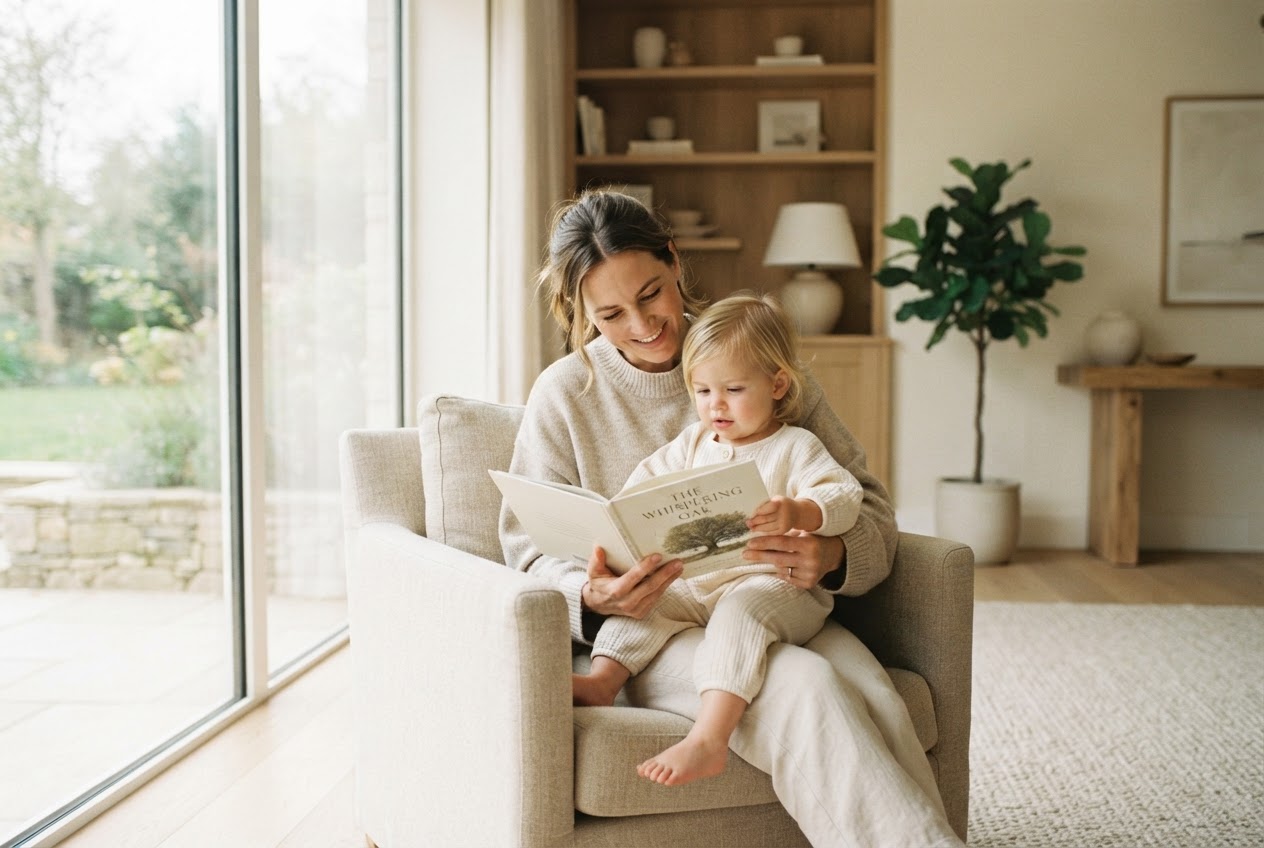
Resilience is not something you teach a toddler. It's something you build — slowly, through the environment you create, the routines you hold, and the way you respond when things go wrong.
The first three years are when the architecture of emotional regulation is laid down. The good news: you don't need a curriculum. You need consistency, warmth, and a few intentional choices.
The foundation: a predictable world
Young children are calmer when their world is predictable. Not rigid — predictable. A consistent bedtime, a familiar sequence to the morning, the same person collecting them each day. Predictability lets a child relax, because they trust what comes next.
When routines are constantly shifting, a child's nervous system stays on alert. This shows up as tantrums, sleep difficulty, and clinginess. Often what looks like a behaviour problem is actually a predictability problem.
The environment as a teacher
A calm, ordered space teaches calm. A space with a few well-chosen toys, accessible at the child's level, encourages focused play. Too many choices overwhelm; a curated few invite depth.
You don't need a Pinterest-perfect nursery. You need a space where your child can reach their things, where there's room to move, and where the visual noise is low.
Responding to big feelings
The hardest — and most important — part of building resilience is how you respond when your child is overwhelmed. A toddler's meltdown is not misbehaviour; it's a nervous system that can't yet regulate itself.
Your job is to be the calm they can borrow. Stay present, stay regulated, and name what you see: You're really frustrated. I'm here. Over time, this teaches them that big feelings are survivable, and that they don't have to manage them alone.
Let them struggle a little
Resilience grows through manageable challenge. A child who is never allowed to struggle — who is always rescued the moment something is hard — doesn't build the muscles of persistence and problem-solving.
Let them try the zipper. Let them climb the step that's a little too high (with you nearby). Let them be bored for a moment before you offer entertainment. Small, safe frustrations are where capability is built.
The role of connection
Underneath all of this is connection. A child who feels securely attached — who trusts that their people will be there — has the foundation for every kind of resilience. Routines, environments and responses all matter, but they rest on the bedrock of a relationship that says: I see you, I'm here, you matter.
Build that, and the rest tends to follow.